My adventure begins in Glasgow, Scotland’s biggest city, which buzzes as the lively launchpad to one of the nation’s most famed historic treasures: Dunnottar Castle. Glasgow, steeped in a rich blend of culture and history, stands as a city where history merges seamlessly with the modern day. It’s a place of architectural marvels, artistic flair, and culinary innovation. The city vibrates with the remnants of its industrial heritage, yet pulses with a fresh, current energy, presenting a distinct mix of experiences for both residents and travelers. From the Gothic elegance of the Glasgow Cathedral to the sleek design of the Riverside Museum, Glasgow showcases the enduring Scottish spirit of resilience and renewal.
Perched on a stark cliff along Scotland’s northeastern shoreline, Dunnottar Castle presents a striking and poignant ruin that echoes Scotland’s stormy history. This ancient stronghold, set against the dramatic backdrop of the North Sea, has been central to Scotland’s narrative, from the early Middle Ages to the Jacobite uprisings. It’s a place steeped in legend, from its role in safeguarding the Scottish Crown Jewels from Oliver Cromwell’s forces to the eerie tales of its dungeons’ forgotten prisoners. The castle’s strategic importance and stunning architecture mark it as a crown jewel of Scottish heritage, drawing visitors worldwide eager to connect with the nation’s rich history.
The drive to journey from Glasgow to Dunnottar Castle stemmed from a longing to dive deep into Scotland’s vast history, adventure, and breathtaking landscapes. There’s something truly magical about following the paths of history, standing in spots once graced by royalty, and taking in the wild beauty of Scotland’s nature. This trip was more than just a journey across picturesque landscapes; it was a deep dive into the heart of this mesmerizing country. It offered a chance to explore historical layers, bask in the beauty that has fueled the imagination of poets and painters for ages, and uncover the enduring Scottish spirit that continues to enchant those who make their way to its coasts.
Table of Contents
Planning the Journey
Mapping out a trip from Glasgow to Dunnottar Castle is an endeavor filled with anticipation, requiring careful planning and research to fully embrace the journey’s potential. By consulting an array of sources, from travel blogs and historical documents to tips from locals, I curated a list of must-visit locations, each rich with its own narrative. My itinerary included the historic stones of Stirling, famous for its majestic castle and pivotal battle sites, to the striking structures of Aberdeen, celebrated as the Granite City for its robust stone architecture.
Packing for Scotland’s famously capricious weather called for a practical approach. I adopted a strategy of layers, not forgetting waterproof gear and durable walking boots, essentials for navigating Scotland’s varied landscapes of gentle hills, steep cliffs, and expansive fields. Essentials also included a dependable map, compass, and power bank, ensuring I could wander off the beaten track and capture Scotland’s stunning vistas worry-free.

Exploring transportation options from Glasgow to Dunnottar Castle presented a mix of possibilities, each with its own set of benefits and limitations. The train ride promised comfort and picturesque views, linking Glasgow with Stonehaven, the closest town to Dunnottar Castle. Yet, the requirement for additional transport from Stonehaven to the castle and the train’s fixed timetable were significant considerations.
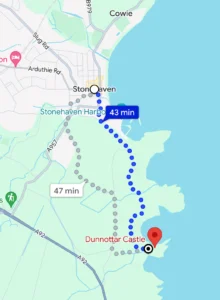
Of course, the last kilometre from Stonehaven to the castle can be done on foot. Buses offered a more budget-friendly alternative but at the expense of convenience and time, due to their roundabout routes and frequent stops.
Ultimately, I decided to hire a car for its flexibility and the liberty to explore at my pace. Scotland’s landscapes are sprinkled with marvels often hidden just beyond the main roads, and driving allowed me to delve into the country’s heart, uncovering its natural and historical wonders unrestrained by public transport schedules. This freedom enabled impromptu excursions to quaint villages, remote beaches, and ancient ruins, enriching my journey with experiences I would have otherwise overlooked. Though more costly than public transport, the investment was worthwhile for the comprehensive exploration it afforded me, transforming the trip into a profound exploration of Scotland’s captivating charm.
The Journey Begins: Glasgow to Stonehaven
My trip from Glasgow to Dunnottar Castle kicked off as the first light of dawn illuminated the city. The quiet streets of Glasgow, shrouded in early morning mist, presented a serene departure from the lively day to come. With a car loaded and the road ahead calling, the excitement for what lay ahead brewed within me. The dew-kissed roads shimmered as we began our northeast journey, leaving behind Glasgow’s architectural wonders in pursuit of Scotland’s storied and natural grandeur.
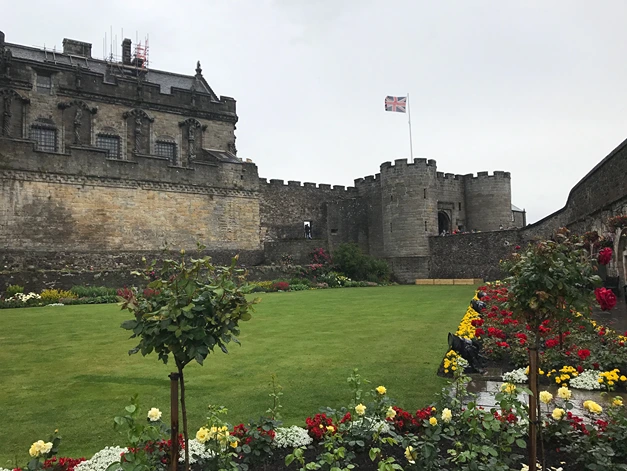
Traveling to Stonehaven felt like weaving through the varied fabric of Scotland’s landscapes, each turn and hill unveiling the country’s rich tapestry of history and geography. Stirling was our first major landmark, its historical gravity underscored by the imposing Stirling Castle against the Ochil Hills’ scenic backdrop. Stopping in Stirling allowed for a moment of historical reflection, with the Battle of Stirling Bridge and the towering Wallace Monument marking Scotland’s spirited fight for freedom.
The route then meandered through Perth, the “Gateway to the Highlands,” where the city’s graceful buildings and the tranquil River Tay painted a serene picture, a prelude to the rugged Highland vistas awaiting us. A side trip to Dundee revealed the city’s modern renaissance, anchored by the V&A Dundee. This design museum, with its bold architecture mirroring Scotland’s cliffs, stood as a proud symbol of the nation’s creative legacy.
Approaching the journey’s end, the path meandered through Aberdeenshire’s coastal splendor, leading to Stonehaven. The road was framed by fields of shimmering barley and views stretching out to the North Sea. Stonehaven’s charm was instantly palpable, from its harbor with gently swaying boats to the inviting local shops and cafes.
In Stonehaven, a quaint restaurant by the harbor served as my introduction to the local cuisine, turning the day’s catch into sumptuous meals. The town’s hospitality, coupled with the ocean’s bounty, offered a warm embrace. I settled into a cozy bed and breakfast, nestled on a quiet lane with breathtaking vistas of the town and sea, where the host’s insights added layers to my experience.
Stonehaven was more than a stopover; it was a testament to Scotland’s enchanting blend of nature, history, and community warmth, perfectly setting the stage for the exploration of Dunnottar Castle. This small town, rich in character, was the perfect prologue to the unfolding story of my Scottish adventure.
Discovering Dunnottar Castle
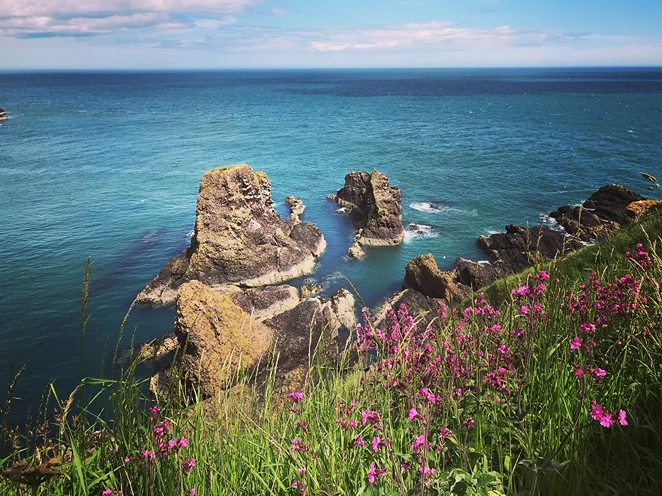
The lead-up to Dunnottar Castle is a prelude that starts well before the fortress itself comes into view. Traveling through Aberdeenshire’s countryside is like stepping into a story from long ago, with meandering trails slicing through swathes of heather and gorse. As the path narrows and the landscape steepens, the scent of salt air fills your senses, a harbinger of the nearby Scottish coast. And then, Dunnottar Castle emerges, dramatically sited on an imposing rock, its presence a vivid contrast against the wild North Sea. The castle, with its aged battlements and towers, stands as a powerful symbol of Scotland’s storied past and the relentless forces of nature. The impact of first seeing it is both immediate and deep, stirring a mix of admiration and an intense historical connection as you approach its entrance.
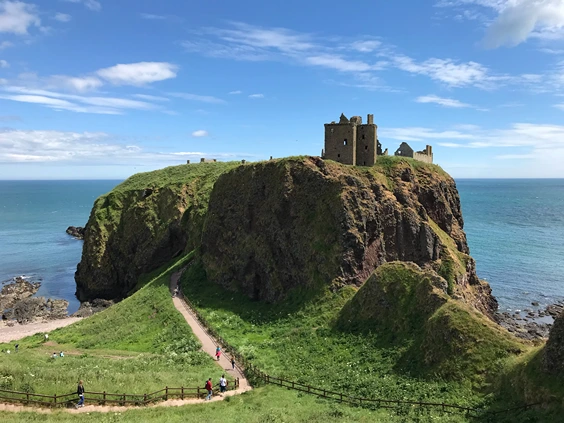
Wandering Dunnottar Castle’s ruins, you traverse centuries. Moving through its expanse, the castle’s history unfurls—from the grandeur of the Great Hall, echoing with bygone feasts, to the chapel’s quiet reverence. The dungeons, somber and eerie, hint at darker times. Within these walls, one can easily conjure images of historical life—the clang of swords, secret whispers, and courtly revelry, all blending with the natural symphony of wind and waves.
My visit was punctuated by moments of deep historical resonance. In the dungeon’s gloom, the past felt almost tangible, a vivid testament to Dunnottar’s complex narrative. Ascending to the castle’s apex offered a breathtaking vista: the North Sea’s vast expanse, a kaleidoscope of blues and greens, with Scotland’s rugged coast stretching into the distance. This panorama underscored Dunnottar’s strategic significance, a guardian of land and sea.
For those drawn to Dunnottar Castle, a few insights can enrich the experience. The castle is most magical in the early morning or late afternoon light, perfect for photography and to sidestep the crowds. Its striking setting is a photographer’s paradise, especially from the east, where the castle stands against the sea’s backdrop. It’s crucial to wear sturdy shoes for the uneven paths and to stay cautious near the cliff edges, especially when the wind picks up.
Dunnottar Castle transcends being merely a historical landmark; it is a confluence of past and present, a narrative of resilience, strategy, and survival carved into every stone and vista. It embodies the indomitable Scottish spirit, offering a profound connection to the nation’s heritage and the natural splendor of its landscapes. This castle is a pivotal exploration for anyone keen to touch the heart of Scotland’s rich history and the unending beauty of its shores.
Beyond Dunnottar: Exploring the Surroundings
While Dunnottar Castle is undoubtedly a standout attraction, it merely opens the door to the broader wonders of the Aberdeenshire coast, a region brimming with natural beauty and historic landmarks. Beyond the majestic ruins of the castle, the landscape reveals a stunning array of cliffs, tranquil beaches, and diverse wildlife, each adding to the region’s captivating charm.
The cliffs near Dunnottar are a defining feature of the coastline, offering breathtaking vistas and serving as a sanctuary for a variety of seabirds. A morning stroll along the cliff tops, amidst the rising sea mist and the echoing calls of gulls, feels like walking through a dream. The trails lead adventurers to hidden coves and secluded beaches, each with its unique character. Cowie Beach, a short distance north of Stonehaven, provides a peaceful retreat, ideal for quiet contemplation or watching the day end with a spectacular sunset.
For wildlife enthusiasts, the Fowlsheugh Bird Reserve is a treasure, particularly during the breeding season. The sight and sounds of thousands of seabirds, including the colorful puffins, razorbills, and guillemots, nesting along the cliffs are truly awe-inspiring. Located a brief drive from Dunnottar, the reserve offers educational walks that delve into the local ecology and the ongoing efforts to protect this essential ecosystem.
The region’s historical and cultural landmarks are as compelling as its natural ones. The Stonehaven Tolbooth, near the harbor, echoes the town’s rich maritime history. Once serving as a prison and courthouse, it now functions as a museum, chronicling the town’s evolution over the centuries. The dedication and knowledge of the local volunteers enhance the experience, making it a must-visit for those keen on understanding the area’s past.
Venturing beyond Dunnottar Castle, you’ll find yourself immersed in a landscape where nature and history are intricately linked, offering a wealth of exploration opportunities. From its dramatic coastlines and rich wildlife to its historical sites and lively traditions, this part of Scotland beckons visitors to explore further, ensuring experiences that resonate well beyond their stay.
Conclusion
Looking back on the trek from Glasgow to Dunnottar Castle and the explorations that followed, it’s evident that Scotland unfurls a rich mosaic of experiences that blend the natural, historical, and cultural into an enthralling story. This voyage was an intimate journey into the essence of Scotland’s celebrated history, set amidst its awe-inspiring landscapes. From the bustling life of Glasgow to the eerie allure of Dunnottar Castle, teetering on its imposing cliff above the North Sea, every step was a revelation of Scotland’s endurance, beauty, and soul.
Among the myriad highlights, the moments spent wandering the ruins of Dunnottar Castle, soaking in the tranquil beauty of the Aberdeenshire coast, and engaging with the local traditions and history were particularly memorable. These experiences didn’t just offer a window into Scotland’s past; they facilitated a deep connection with the land and its people. This adventure highlighted the critical role of conservation, preserving these landmarks not merely as historical artifacts but as living narratives that teach us about resilience, identity, and the flow of time.
Practical Information and Tips
Travel Tips:
- Best Time to Visit: The ideal time to explore Dunnottar Castle and its surroundings is from late spring to early autumn (May to September). During these months, the weather is more favorable, with longer daylight hours allowing for extended exploration. However, to avoid the peak tourist season and enjoy a more tranquil visit, consider late spring (May to early June) or early autumn (September), when the weather is still pleasant, but the crowds are thinner.
Must-Have Experiences:
- Walk the Coastal Path: The walk from Stonehaven to Dunnottar Castle along the coastal path offers breathtaking views of the cliffs and the sea. It’s a peaceful experience that allows you to connect with the natural beauty of the area.
- Explore the Local Festivals: If your visit coincides with local events like the Stonehaven Fireball Festival or the Highland Games, don’t miss the opportunity to experience these unique cultural celebrations.
- Visit the Fowlsheugh Bird Reserve: For nature enthusiasts, a trip to this nearby seabird reserve during the breeding season is a remarkable experience, offering the chance to see thousands of seabirds in their natural habitat.
Ultimate Guide to the Isle of Skye: Discovering Scotland’s Enchanted Island
Exploring Neuschwanstein Castle: The Ultimate Travel Guide to Germany’s Dream Castle